


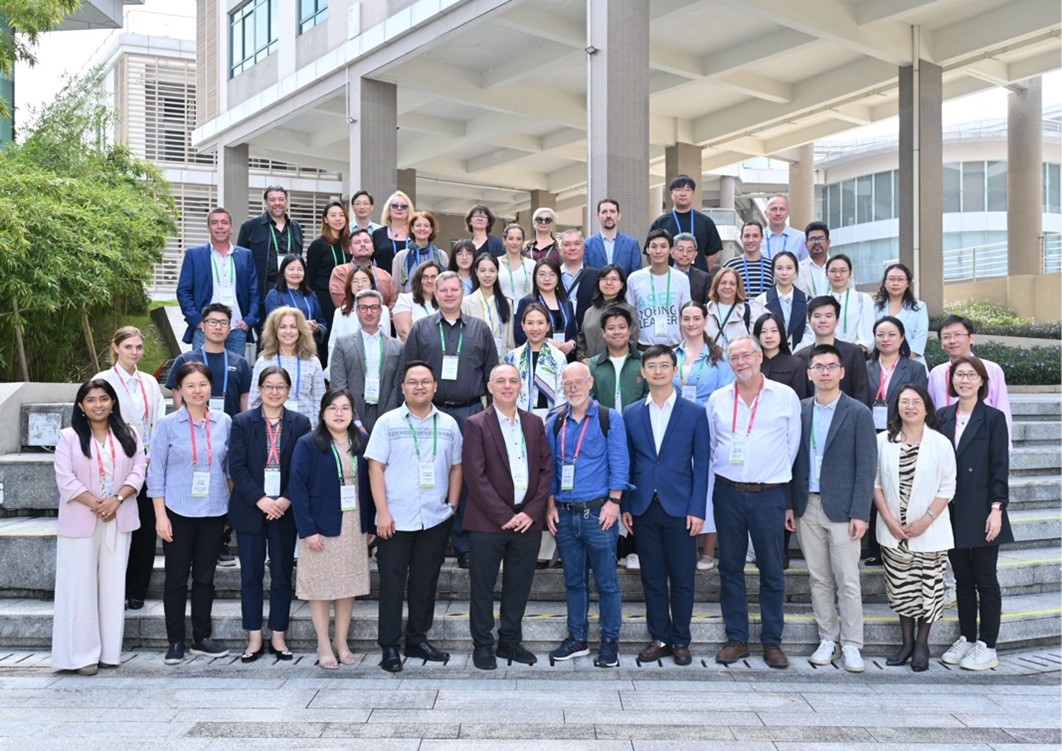
Bridging Asian and European Expertise to Shape the Future of EducationThe 18th ASEF ClassNet Faculty Collaboration Conference Held at BNU Zhuhai CampusFrom November 11 to 16, 2025, the 18th Asia-Europe Foundation Classroom Network Faculty Collaboration Conference (ASEFClassNet18), hosted by the Faculty of Education of the Future at Beijing Normal University (BNU), was successfully convened at the BNU Zhuhai Campus. Over the five-day event, the conference brought together more than 50 experts, scholars, teacher trainers, and educators from over 30 countries across Asia and Europe to explore how artificial intelligence (AI) and intercultural dialogue can collectively reshape the future of teaching and learning.
Centered on the theme “Effective, Inclusive, and Ethical AI in Education,” the 18th ASEF ClassNet initiative aimed to establish a multidisciplinary platform for shared learning, critical reflection, and collaborative visioning among researchers and practitioners from both regions. From May to November 2025, participants engaged in regular online exchanges and group discussions, culminating in the co-authorship of the volume Effective, Inclusive, and Ethical AI in Education Design. This publication has been incorporated into the United Nations University (UNU) series on AI and Sustainable Development, serving as a reference for global AI education policy.
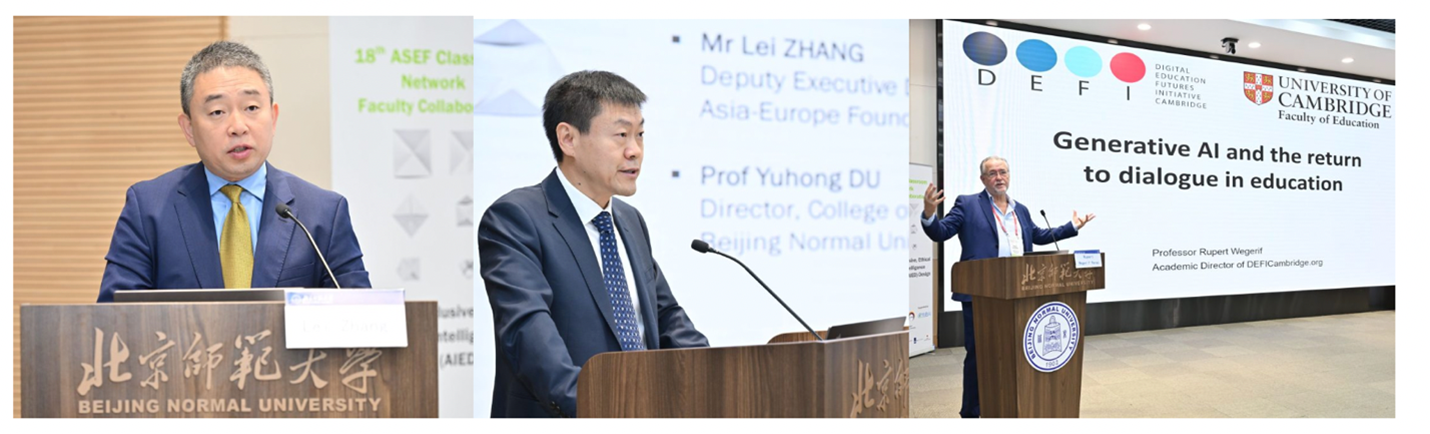
During the opening ceremony, Professor Du Yuhong, Dean of the Faculty of Education of the Future at BNU, delivered an insightful address. He emphasized, “The core of education lies in people. Technology may change how we learn, but it cannot alter why we learn.” This human-centered perspective set the tone for the conference, reminding attendees to uphold the fundamental mission of education amid technological transformation.
Mr. Zhang Lei, Deputy Executive Director of the Asia-Europe Foundation (ASEF), highlighted that we are at a critical juncture where the focus should not be on what AI can do for education, but on how educators can design AI applications that are effective, inclusive, and ethical.
Professor Rupert Wegerif, Director of the Digital Education Futures Initiative (DEFI) at the University of Cambridge, called for a reimagining of education—not only educating through dialogue but also “constructing education within dialogue.”
 A key component of the conference involved 12 multinational teams, representing diverse cultural backgrounds, engaging in face-to-face discussions and revisions of each chapter of the co-authored book. These sessions built upon their prior online collaboration.
Facilitated by Professor Wayne Holmes of University College London, Professor Yuan Li of BNU, and Ms. Jyoti Rahaman, ASEF Project Lead, a series of workshops enabled each team to present their chapters. These were followed by vigorous discussions and constructive feedback from participating experts, scholars, and researchers. This interdisciplinary and cross-cultural collaborative writing process not only strengthened academic ties between Asia and Europe but also demonstrated the value of collective knowledge creation in addressing global educational challenges.
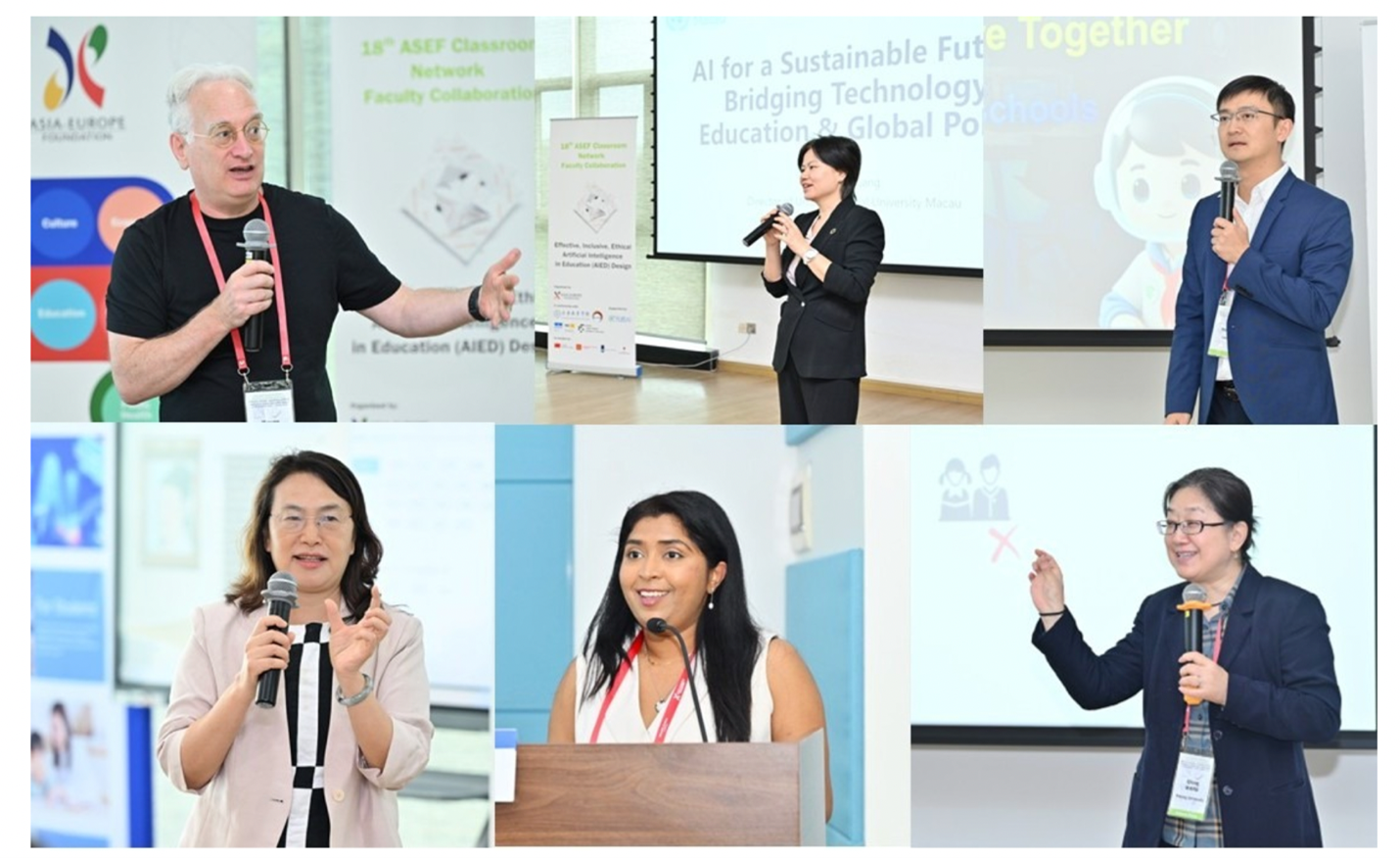
During the conference, the International Symposium on AI in Education (AIED Symposium) was also organized. Nine researchers from universities and training institutions across Asia and Europe presented their latest findings and studies on AI in education. Additionally, 17 primary and secondary school teachers from 14 countries shared practical cases of AI integration in classroom teaching. A panel of ten experts further engaged in a dialogue on the topic “Future AI in Education: Teachers or Algorithms—Which Matters More?” addressing critical issues such as AI-driven learning design, cognitive offloading, adaptive learning environments, and teacher agency. The symposium underscored the importance of evidence-based practice in educational innovation.
Furthermore, conference delegates visited the 7th China Education Innovation Expo, where they observed educational technology solutions and innovative school models from across China. This visit provided a direct link between global perspectives and local educational innovations, offering valuable opportunities for exchange among Asian and European educators.Moving forward, the Faculty of Education of the Future at Beijing Normal University remains committed to fostering the development of an Asia-Europe education community. Through sustained transnational collaboration, it aims to contribute to a more inclusive, ethical, and innovative future educational ecosystem.
https://asef.org/news/asefclassnet18-faculty-collaboration-conference-in-zhuhai-china/
 Last Page
 Phone:0756-3621121
 Email:ccie@bnu.edu.cn